By Stephen King
Finished 3/22/26
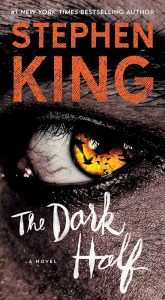
After just finishing The Dark Half, my feelings on the novel are oddly similar to the core of the story. Meaning, I’m in the middle on how I feel about it. I liked it, didn’t love it, but it’s one of those books I’ve kept thinking about after finishing, which usually means there’s something there.
The whole thing is really about duality, but in a very literal, uncomfortable way. Not just “you have a dark side,” but what happens if that side is actually the version of you that works. The one that succeeds. The one people respond to. And what if that version doesn’t want to stay contained.
That idea carries the book more than anything else.
What I liked most was how my perception of the main character Thad kept shifting. Early on he feels like a guy who kind of gamed the system. Created a pen name (George Stark), wrote under it, found success that way. It almost feels a little cheap at first. But as the story goes on, that explanation stops working. It starts to feel less like something he chose and more like something that happened to him. Like he’s not fully in control of where that other side came from or what it wants.
That’s where King is always good. He takes something that seems explainable and slowly makes it feel inevitable.
And by the end, you’re not really asking “how does this end,” you’re asking what he’s willing to do. Does he give in to it? Does he fight it? Is it even possible to separate the two? There’s a version of this story where it’s clearly good vs evil, but this never really lets you settle into that.
I also liked the police character (Sheriff Alan Pangborn) assigned to all the murders occurring. He starts as the only grounded person in the story, trying to apply logic to something that should make sense. And then over time, that just breaks down. Watching someone slowly accept that the rules they rely on don’t apply here is always a strong move in King books.
Where it lost me a bit is that the world didn’t feel as full as his best stuff. Outside of Thad and his other half, there isn’t a ton of depth to the other characters. His wife Liz gets some attention, but overall it feels more contained than what I usually expect from him.
At the same time, that probably helped it. It’s shorter, tighter, and it doesn’t drag. Honestly if this was a longer book, I might not have finished it. The story itself isn’t strong enough to carry an extra couple hundred pages.
There was also something I kept expecting to connect that never really did. The thread with his kids felt like it was pointing toward something bigger, especially given the whole duality theme, and it just sort of… doesn’t go there. Maybe that’s intentional, maybe it’s just left open, but it felt like there was another layer that could’ve been pulled in.
The ending is where it really picked up for me. It’s darker than I expected, even for King. Not just in what happens, but in the feeling it leaves you with (sparrows—mythology—psychopomps—an insane feather-swarming occurrence etched forever in my memory with them and Thad/George). It doesn’t wrap things up cleanly. It feels more like a warning than a resolution. Like even when something is “over,” it might not actually be finished.
I wouldn’t put this in his top tier, but it has one of his more interesting core ideas. It almost feels like a more personal book about identity and the cost of success, just told through a horror lens.
Rating: 7/10
What’s next: hoping I haven’t hit the ceiling on King books yet. Moving on to The Death Zone next and have high hopes!
 KennyBloggins is Kenny Bringelson