By Stephen King
Finished 1/22/26
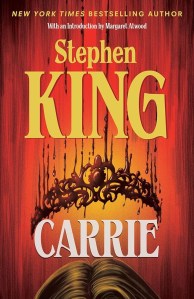
Carrie is just a well-written—and honestly horrifying—story. It’s one of Stephen King’s most well-known books, so there’s probably no huge need to summarize the entire plot, except for my own memory. What stands out immediately is how simple the premise is and how effectively King turns that simplicity into something unsettling and tragic.
The novel centers on Carrie White, a quiet and painfully awkward high school girl who is brought up by an extremely religious mother determined to force Carrie to follow in her footsteps. That upbringing leaves Carrie completely unprepared for normal parts of life, including a now-famous scene early in the book where she experiences her first period in the girls’ locker room shower. The other girls mock her mercilessly because she has no idea what is happening. It’s a scene that is both uncomfortable and heartbreaking, and it really sets the tone for the rest of the story.
The cruelty from her classmates leads to consequences for some of the girls, including detention that threatens their ability to attend prom. One of them, Chris, refuses the punishment and becomes determined to get revenge on Carrie. Meanwhile another student, Sue Snell, actually feels guilty about what happened and encourages her boyfriend Tommy to take Carrie to prom as a genuine act of kindness. That decision creates one of the most emotionally interesting parts of the book because, for a brief moment, it seems like Carrie might finally be accepted.
Of course, this is a Stephen King story, and things don’t stay hopeful for long. What begins as a simple act of teenage cruelty eventually escalates into something far darker, especially once Carrie’s telekinetic abilities start to emerge. The famous prom sequence is chaotic and terrifying, and it transforms the novel from a story about bullying into something much larger and more destructive.
One of the most interesting aspects of Carrie is the way King structures the book. Instead of telling the story in a completely straightforward way, he jumps between multiple perspectives and formats—Sue Snell’s later reflections, excerpts from police interviews with survivors, and even newspaper articles examining what happened. That approach gives the novel a strange documentary-like feeling, as if the reader is piecing together the aftermath of an event that shocked an entire town.
Reading it now, it’s also fascinating to see such early writing from King. The voice isn’t quite as polished as some of his later work, but the ideas are already incredibly strong. You can clearly see the themes that would come to define much of his career: social cruelty, small-town pressure, and the terrifying consequences of power appearing in the wrong place at the wrong time.
Even decades later, Carrie still feels tense, tragic, and strangely sympathetic toward its central character. It’s easy to see why it became such an iconic story.
Rating: 8.5/10
 KennyBloggins is Kenny Bringelson