By Stephen King
Finished 8/14/25
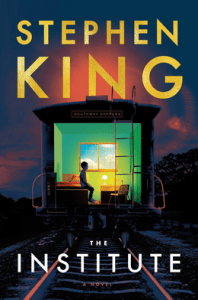
The Institute is another near-perfect Stephen King read and one that feels a little different from many of his other books. At its core, it’s a story about telekinetic and telepathic kids who are kidnapped from their homes and forced to live inside a mysterious facility known as the Institute. The children are told one thing about why they’re there, but it becomes increasingly clear that something far darker is happening behind the scenes.
The premise itself is immediately compelling. These kids are taken from their families and placed into a controlled environment where they are studied, tested, and experimented on. The Institute is divided into two main sections—Front Half and Back Half—and the progression between the two creates a constant sense of tension as the story unfolds. Even early on, there’s a lingering feeling that things are going to get worse the deeper the story goes.
What really makes the novel work, though, is the way King structures the narrative. The book follows three main storylines that slowly move toward each other. One follows Luke, the incredibly smart young boy trying to figure out how to escape the Institute. Another focuses on Tim, a former cop who is now working as a night watchman in a small town. The third storyline centers on the people actually running the Institute, including Mrs. Sigsby and her staff as they attempt to maintain control and track down problems inside the facility.
Watching those three threads gradually come together is where the book really shines. Each storyline is interesting on its own, but when they start intersecting the tension ramps up in a very satisfying way. King has always been great at juggling multiple perspectives, and here it feels especially effective.
The kids themselves are also a major strength of the novel. Luke forms friendships with several of the other children inside the Institute, and those relationships give the story real emotional weight. Characters like Maureen, the maid who begins to feel guilty about what’s happening, add an extra layer to the narrative by showing that not everyone inside the system fully believes in what they’re doing.
One of the most interesting elements of the book is the larger question behind the Institute’s existence. Without giving too much away, the story eventually raises the idea that the people running the operation believe they are doing something necessary for the greater good. That moral tension—whether terrible actions can ever be justified if the outcome supposedly saves lives—adds a philosophical layer that sticks with you long after finishing the book.
What makes The Institute stand out is how well all these pieces come together: the mystery of the facility, the friendships among the kids, the outside investigation slowly building, and the bigger questions about power and control. It feels like classic Stephen King storytelling but with a slightly different angle than many of his other novels.
For me, it ended up being one of the most engaging King books I’ve read.
Rating: 9.9/10
 KennyBloggins is Kenny Bringelson