By Stephen King (written as Richard Bachman)
Finished 4/20/25
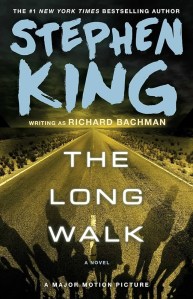
Really enjoyed this one. It’s one of King’s simplest premises, but it ends up being one of his most unsettling.
The setup is brutally straightforward: 100 teenage boys enter a contest where they must keep walking until only one of them is left. They have to maintain at least four miles per hour, stay on the road, and if they slow down they receive warnings. Three warnings are allowed—on the fourth, they’re shot. Warnings reset after an hour if you manage to keep your pace. The walkers get small food rations and all the water they want, but otherwise it’s just step after step until your body (or your mind) gives out.
The story mostly follows Ray Garraty, who becomes the emotional center of the group. Along the way he forms bonds with several of the other walkers, especially McVries, who ends up being one of the most compelling characters in the book. Their friendship—and the way the boys alternately support each other, clash with each other, and slowly break down—is really the heart of the story.
A third major figure is Stebbins, the quiet, intense walker who always seems to have a little more left in the tank than everyone else. His role in the story becomes more interesting as things narrow down toward the end.
What I liked most about the book is how much time King spends inside the heads of these kids. As the miles stack up, their moods swing wildly. Sometimes they’re joking, telling stories, almost acting like they’re on a strange road trip together. Other times the tension turns into resentment, anger, or despair. It starts to feel less like a competition and more like a group of soldiers marching toward something none of them can avoid.
And that’s probably why the book works so well—it’s clearly about more than just the walk itself.
You can read it as a metaphor for a lot of things. Life, obviously. Everyone’s walking the same road, and eventually everyone drops out. There’s technically a “winner,” but the idea of a prize at the end starts to feel meaningless after everything the characters go through.
There’s also a darker angle about spectatorship. Crowds line the roads cheering the walkers on, watching kids collapse and die like it’s entertainment. It taps into that uncomfortable truth about how fascinated people are with spectacle and suffering.
Some people also see it as a metaphor for war—especially Vietnam, which was happening around the time King originally wrote it. A long, grinding ordeal where survival itself might not feel like much of a victory.
The ending is intentionally a little ambiguous. Garraty technically wins, but the final moment has a strange, almost surreal feeling to it. It’s hard to tell exactly what King wants you to think is happening there, and I kind of like that he leaves it open.
Bleak, tense, and surprisingly emotional for such a stripped-down concept.
Rating: 8.5/10
 KennyBloggins is Kenny Bringelson