Book Review: The Stranger In Her House

By John Marrs

Finished 9/1/25

The Stranger in Her House is a fun, twisty thriller that keeps the reader guessing almost the entire way through. Kristi recommended I give this one a try, and I’m glad I did—it’s the kind of book that pulls you along quickly with lots of reveals, shifting perspectives, and characters who may not be exactly who they claim to be.

The story centers on a woman named Connie who spends much of her time looking after her mother Gwen, who suffers from dementia. Their quiet routine gets disrupted when a charming man named Paul suddenly enters their lives and quickly becomes part of the household. From there the story starts layering on suspicion, secrets, and hidden motives, with the relationships between the characters becoming more complicated the further things go.

What makes the book entertaining is how often the narrative flips expectations. Just when it feels like you’ve figured out who the real villain is, the story pivots and reveals something new about another character. Marrs clearly enjoys playing with those shifting loyalties, and the novel becomes less about one single mystery and more about a group of people who are all hiding something.

There are quite a few twists as the story moves forward, and the book does a good job maintaining that tension for most of the ride. At times it almost feels like the characters are constantly trying to outmaneuver each other, which makes it fun to watch the different schemes unfold. That unpredictability is easily the biggest strength of the novel.

The only real drawback for me was the pacing near the end. After a lot of careful buildup, the final portion of the story moves extremely fast. The last hundred pages or so almost feel like they fly by, resolving several plot threads very quickly after all the twists that came before.

Still, as a fast-moving thriller full of surprises, The Stranger in Her House delivers plenty of entertainment. It’s the kind of book that keeps you turning pages just to see what the next reveal will be.

Rating: 7.5/10
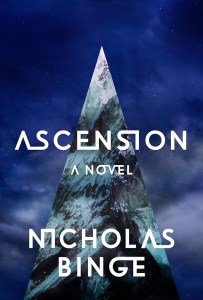
Book Review: Ascension

By Nicholas Binge

Finished 3/15/25

This one started incredibly strong for me—probably for about two-thirds of the book—before the ending lost a bit of its magic.

The story is framed around a man who was believed dead but has somehow turned up in a mental hospital. With him is a briefcase full of letters describing the expedition he went on, and the book unfolds through those accounts. The letters detail an unbelievable journey to a massive mountain range that suddenly appears in the middle of the ocean—bigger than anything humanity has ever seen.

From there, the story becomes about the climb itself. But it’s not just a physical ascent. It slowly turns into something much stranger and more psychological. The higher they go, the more reality seems to bend. Time doesn’t behave the way it should, people begin to lose their grip on what’s real, and the environment itself feels like it’s operating on rules humans don’t fully understand.

One of the coolest parts of the book is how it explains higher dimensions. There’s a great analogy about an ant moving across a table—it can only understand forward and backward across the surface. If something existed above that plane, the ant wouldn’t be able to perceive it. The idea is that humans might be in a similar position when it comes to a fourth dimension. The book plays with that concept in a really fun way, imagining folds or pathways that move through time and space in ways we can’t normally experience.

For most of the book, that mystery is what keeps it so compelling. Strange things start happening during the climb—visions, overlapping moments in time, encounters that don’t quite make sense—and you’re constantly trying to piece together what’s actually going on. It has that great creeping sense of unease where the environment itself feels almost alive.

Where the book stumbled for me was the final stretch. After so much buildup and such a fascinating mystery, the explanation didn’t feel quite as satisfying as the journey getting there. It’s not terrible—it just felt like the story shifted away from the eerie, mind-bending tone that made the earlier parts so gripping.

Still, the atmosphere and ideas carry the book a long way. The concept alone is strong enough that I kept thinking about it afterward, especially the way it plays with perception, time, and how limited our understanding of reality might actually be.

7.5/10 — mostly because the ending was fairly weak, but the concept and majority of the book were enjoyable.