Book Review: Dolores Claiborne

By Stephen King

Finished 5/30/25
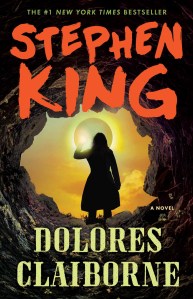
This one grabbed me immediately and never really let go. What’s wild is that the whole book is basically one continuous monologue—no chapters, just Dolores telling her story straight through—and somehow it only makes it more gripping. It feels like you’re sitting across the table from her while she unloads decades of her life.

Dolores is recounting everything to investigators who think she may have had something to do with the death of the wealthy woman she worked for, Vera Donovan. From there the story slowly opens up into something much bigger: her life, her marriage, and the long shadow cast by her abusive husband.

That husband is one of the most despicable characters King has ever written. The cruelty in that household—especially what he does to their daughter—is almost unbearable at times, and it’s the driving force behind everything Dolores eventually does. Her decision to get rid of him doesn’t come from anger so much as it comes from protection. She’s trying to stop something that’s already gone too far.

The way it all unfolds is classic King tension. Dolores gets him drunk, lures him out toward a well, and lets gravity and circumstance do the rest. But King doesn’t make it simple or clean. The scene at the well—what Dolores sees looking down into it, what happens as her husband struggles—is one of the most vivid stretches of writing in the whole book.

Running alongside that story is Dolores’s long, complicated relationship with Vera Donovan, the wealthy woman she works for. Their dynamic ends up being one of the best parts of the novel. Vera is sharp, intimidating, and clearly understands more about Dolores’s situation than she ever says outright. The conversations between them feel like two incredibly tough people recognizing something in each other.

And the whole thing taking place during a solar eclipse is such a perfect Stephen King touch. The town is distracted, everyone’s outside watching the sky, and Dolores knows exactly what that means.

What really makes the book work, though, is the voice. King completely disappears into Dolores. She’s blunt, funny, observant, and far smarter than people assume. By the time you’re halfway through, it doesn’t feel like a novel anymore—it feels like a confession.

It’s chilling, tense, and surprisingly emotional in places. And the fact that King builds an entire cast of characters and decades of history through a single voice is pretty remarkable.

Rating: 9/10
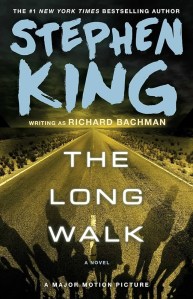
Book Review: The Long Walk

By Stephen King (written as Richard Bachman)

Finished 4/20/25

Really enjoyed this one. It’s one of King’s simplest premises, but it ends up being one of his most unsettling.

The setup is brutally straightforward: 100 teenage boys enter a contest where they must keep walking until only one of them is left. They have to maintain at least four miles per hour, stay on the road, and if they slow down they receive warnings. Three warnings are allowed—on the fourth, they’re shot. Warnings reset after an hour if you manage to keep your pace. The walkers get small food rations and all the water they want, but otherwise it’s just step after step until your body (or your mind) gives out.

The story mostly follows Ray Garraty, who becomes the emotional center of the group. Along the way he forms bonds with several of the other walkers, especially McVries, who ends up being one of the most compelling characters in the book. Their friendship—and the way the boys alternately support each other, clash with each other, and slowly break down—is really the heart of the story.

A third major figure is Stebbins, the quiet, intense walker who always seems to have a little more left in the tank than everyone else. His role in the story becomes more interesting as things narrow down toward the end.

What I liked most about the book is how much time King spends inside the heads of these kids. As the miles stack up, their moods swing wildly. Sometimes they’re joking, telling stories, almost acting like they’re on a strange road trip together. Other times the tension turns into resentment, anger, or despair. It starts to feel less like a competition and more like a group of soldiers marching toward something none of them can avoid.

And that’s probably why the book works so well—it’s clearly about more than just the walk itself.

You can read it as a metaphor for a lot of things. Life, obviously. Everyone’s walking the same road, and eventually everyone drops out. There’s technically a “winner,” but the idea of a prize at the end starts to feel meaningless after everything the characters go through.

There’s also a darker angle about spectatorship. Crowds line the roads cheering the walkers on, watching kids collapse and die like it’s entertainment. It taps into that uncomfortable truth about how fascinated people are with spectacle and suffering.

Some people also see it as a metaphor for war—especially Vietnam, which was happening around the time King originally wrote it. A long, grinding ordeal where survival itself might not feel like much of a victory.

The ending is intentionally a little ambiguous. Garraty technically wins, but the final moment has a strange, almost surreal feeling to it. It’s hard to tell exactly what King wants you to think is happening there, and I kind of like that he leaves it open.

Bleak, tense, and surprisingly emotional for such a stripped-down concept.

Rating: 8.5/10