Book Review: Elevation

By Stephen King

Finished 1/31/26
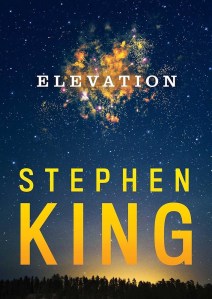
Elevation is a really beautiful and curious story, a novella that finds the perfect balance of getting somewhat deep on the important characters while also moving quickly through the narrative. Stephen King keeps the focus intentionally small, centering the story on only a handful of people and allowing their relationships to carry the emotional weight of the book.

The premise itself is simple but incredibly intriguing. Scott, a big fella, starts to feel like he’s losing weight. His mood improves, he has more pep in his step, and he generally feels better. The strange part is that nothing about him physically changes. Yet when he jumps on the scale, he definitely is losing weight. Week after week he drops about three pounds, even though his body never seems to change shape. It’s one of those classic Stephen King ideas—slightly surreal but presented in a very grounded way that makes you immediately curious about where it’s going.

What makes the novella work so well is how King uses that strange premise to explore the people around Scott rather than turning it into a full-blown mystery. Scott spends time talking with an elder doctor friend about what’s happening to him, and he also develops an unexpected relationship with two gay women who live nearby and run a restaurant. The town treats them poorly, which gives the story an interesting social undercurrent, but the real focus is on how Scott gradually earns their trust and friendship.

The story moves quickly but never feels rushed. King gives just enough time to the key moments—especially a local 10K race that becomes one of the emotional highlights of the book—while keeping the overall narrative tight and focused. Because the book is so short, there’s almost no wasted space. Every scene either deepens Scott’s relationships or pushes the strange premise forward.

What stood out most to me is how uplifting the story ultimately feels. Despite the unusual situation Scott finds himself in, the tone never becomes dark or heavy. Instead it slowly turns into something about letting the weight off your shoulders and realizing what’s actually important in life—friendship, kindness, and human connection.

Elevation may be a small story in terms of length, but it leaves a surprisingly strong impression. It’s thoughtful, a little strange in the best Stephen King way, and a perfect example of how effective a novella can be when it focuses on character and theme rather than scale.

Rating: 9/10 — amazing and quick read.
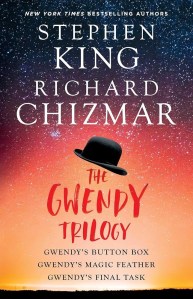
Book Review: Gwendy’s Button Box and Gwendy’s Magic Feather

By Stephen King & Richard Chizmar

Finished 1/6/26 and 1/13/26

Gwendy’s Button Box and Gwendy’s Magic Feather make for a fascinating but uneven pair of novellas, built around an interesting concept that starts strong but loses some momentum along the way. The first book—co-written by Stephen King and Richard Chizmar—is a fun, very fast read at just 166 pages, something that can easily be finished in a single day. It’s highly engaging and reads somewhat like a King story, though with noticeably less character, setting, and plot development than many of his longer works.

The story centers on a very young girl named Gwendy whose life changes when a mysterious man named Richard Ferris suddenly appears and gives her a strange wooden box. The box has several buttons: seven colored ones for each continent, a red button that can grant “whatever you want,” a black button she eventually calls the “cancer button,” and a small lever that spits out delicious chocolates. Ferris gives almost no real guidance about how the box should be used and then disappears, leaving Gwendy alone with something that clearly carries enormous power.

What makes the premise so compelling is the uncertainty surrounding Ferris himself. He’s not quite as openly sinister as some of King’s classic villains—especially someone like Randall Flagg—but there’s something undeniably creepy about him. You never really know if he has good intentions or if he’s simply testing people by placing dangerous power in their hands. Watching how Gwendy grows up with the box quietly influencing her life is the most interesting part of the story.

The first novella moves quickly but still manages to deliver a few dark and memorable moments. At times it almost feels like a moral fable about temptation and responsibility, exploring what happens when someone ordinary is handed something capable of enormous consequences. The pacing and simplicity actually work in its favor, even if the story occasionally feels a little thin.

The sequel, Gwendy’s Magic Feather, shifts the story forward many years and follows Gwendy as an adult returning to Castle Rock around Christmas and New Year’s. This time she’s a congresswoman, and the mysterious box once again finds its way back into her life. Unfortunately the difference in authorship becomes noticeable here. This second installment is written solely by Richard Chizmar, and the writing often feels more half-baked and predictable compared with the first book.

The ideas are still interesting—there are magical events, personal struggles, and even a mystery involving murdered girls—but the execution doesn’t feel nearly as sharp. The pacing is slower in places, and the narrative lacks some of the tension and atmosphere that made the original novella so engaging. While it’s still a quick and readable story, it doesn’t quite capture the same sense of intrigue surrounding the box or the character of Richard Ferris.

Taken together, the two books are still enjoyable as a concept. The mysterious box, the moral ambiguity behind its powers, and the lingering presence of Ferris make the series intriguing enough to keep exploring. With Stephen King returning as a co-writer for the third book, there’s reason to hope the story regains some of the energy that made the first installment so compelling (but I haven’t quite gotten there yet).

First Book: 7.5/10

Second Book: 6/10

Combined Rating: 7/10

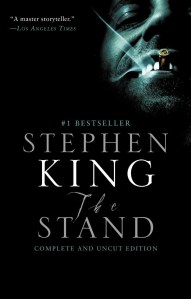
Book Review: The Stand

By Stephen King

Finished 1/4/26

The Stand is massive in every possible way. At over 1,000 pages, it’s easily one of Stephen King’s biggest and most ambitious novels, both in scope and in the sheer number of characters and storylines it tries to juggle. Finishing it feels a bit like completing a long journey, one that moves from eerie realism to something much larger and more mythic as the story unfolds.

One thing that immediately stood out to me was how glad I am that I didn’t read this before the pandemic. The early sections of the book are almost uncomfortably realistic. King’s fictional virus, known as “Captain Trips,” begins with a lab accident and quickly spreads across the country, wiping out the vast majority of the population. The way people panic, turn on each other, and slowly realize how bad things are becoming feels almost too real at times.

The descriptions of the aftermath are incredibly vivid. There are scenes of tunnels packed with car wrecks and decaying bodies, homes filled with the same, and detailed accounts of what the disease actually does to people as it progresses. King describes the physical symptoms—like the black welts in the throat—with a level of detail that makes the whole situation feel disturbingly believable.

The novel also features probably the most characters of any King book I’ve read so far, and that’s honestly where my only real criticism comes in. It takes literally hundreds of pages to fully get started because the book spends so much time introducing different people and their backstories. At times it becomes hard to keep track of everyone or tell them apart, especially early on.

That said, once the story settles into its main group of characters, it becomes much easier to connect with the ones who really matter. Nick Andros is one of the standouts—a deaf but incredibly smart and compassionate leader who becomes one of the central figures holding the group together. Tom Cullen is another memorable character, a simple and childlike man who ends up playing a surprisingly important role later in the story. And then there’s Stu Redman, who feels like the heart of the novel in many ways. Stu is just an easy character to root for, a steady and decent person trying to navigate a completely broken world.

As the story moves forward, the novel shifts into its larger central theme: the divide between good and evil. Survivors eventually gather into two main groups—Mother Abigail leading the community in Boulder, and Randall Flagg building his own society in Las Vegas. The conflict between those two sides becomes the core of the book, though King keeps things interesting by occasionally showing that the moral lines aren’t always as simple as they appear.

Some of the most memorable moments come late in the novel, when the tension between the two sides finally reaches its breaking point. The events surrounding the confrontation with Flagg’s followers are intense, strange, and very much in line with King’s tendency to mix horror with something almost supernatural.

In the end, The Stand feels like one of King’s most ambitious books—an enormous story about survival, morality, and what people do when the structure of society disappears. It can be a little slow getting started, and the huge cast of characters sometimes makes things harder to follow, but the scale and imagination behind the story make it hard not to admire.

It’s definitely up there with his best work, even if it’s not quite my personal favorite.

Rating: 8.5/10

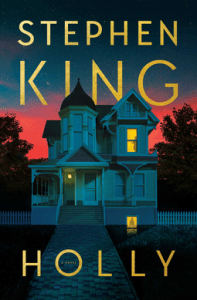
Book Review: Holly

By Stephen King

Finished 9/20/25

Holly is a fabulous, very traditional-feeling mystery that shows Stephen King leaning more into detective fiction than outright horror. The story follows private investigator Holly Gibney, who unexpectedly strikes it rich after inheriting money from her deceased mother—someone she openly despised—but chooses to keep working anyway. That decision sets the stage for a case that slowly unfolds into something far darker than it initially appears.

The mystery begins with several missing people and Holly trying to figure out what connects them. As the investigation develops, it becomes clear that the victims are linked in ways that no one initially expects. The trail eventually leads to a pair of professors, Em and Roddy Harris, whose disturbing secret centers around a belief that consuming certain “nutrients”—particularly human organs—can keep them living longer and healthier lives. The idea is grotesque, but King presents it in a way that feels almost clinical, which somehow makes it even creepier.

One of the strongest parts of the novel is Holly herself. She’s a really interesting character you just want to root for. Holly is thoughtful, careful, and often unsure of herself, but she has a persistence that makes her a compelling detective. The relationships around her help give the book its emotional center, especially the dynamic between Holly, Jerome, and Jerome’s sister Barbara, who helps out at the agency.

Barbara’s own storyline ends up becoming surprisingly important. She develops a connection with an older poet professor named Olivia, a character who is warm, funny, and genuinely kind. Through that relationship, Barbara begins uncovering pieces of information that eventually help Holly connect the dots in her investigation. Those smaller character interactions add a lot of depth to the story and keep it from feeling like just a straightforward procedural.

King also does a great job making the villains especially detestable. Em and Roddy Harris are arrogant, snobby, and convinced they are smarter and better than everyone else. Their self-importance and cruelty make it easy to root for their downfall (tied to their unique, ahem, “diet”) as the story builds toward its final confrontation.

In the end, what really carries Holly are the relationships—Holly working through the case, Jerome and Barbara supporting her, and even Holly’s partner Pete helping from a distance while dealing with COVID. Those connections give the book warmth even as the mystery itself becomes darker and more dangerous.

By the final pages, Holly has survived another brutal case and is already looking toward the next one. After finishing the book, it’s easy to feel the same way.

Rating: 8.5/10

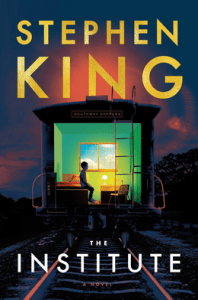
Book Review: The Institute

By Stephen King

Finished 8/14/25

The Institute is another near-perfect Stephen King read and one that feels a little different from many of his other books. At its core, it’s a story about telekinetic and telepathic kids who are kidnapped from their homes and forced to live inside a mysterious facility known as the Institute. The children are told one thing about why they’re there, but it becomes increasingly clear that something far darker is happening behind the scenes.

The premise itself is immediately compelling. These kids are taken from their families and placed into a controlled environment where they are studied, tested, and experimented on. The Institute is divided into two main sections—Front Half and Back Half—and the progression between the two creates a constant sense of tension as the story unfolds. Even early on, there’s a lingering feeling that things are going to get worse the deeper the story goes.

What really makes the novel work, though, is the way King structures the narrative. The book follows three main storylines that slowly move toward each other. One follows Luke, the incredibly smart young boy trying to figure out how to escape the Institute. Another focuses on Tim, a former cop who is now working as a night watchman in a small town. The third storyline centers on the people actually running the Institute, including Mrs. Sigsby and her staff as they attempt to maintain control and track down problems inside the facility.

Watching those three threads gradually come together is where the book really shines. Each storyline is interesting on its own, but when they start intersecting the tension ramps up in a very satisfying way. King has always been great at juggling multiple perspectives, and here it feels especially effective.

The kids themselves are also a major strength of the novel. Luke forms friendships with several of the other children inside the Institute, and those relationships give the story real emotional weight. Characters like Maureen, the maid who begins to feel guilty about what’s happening, add an extra layer to the narrative by showing that not everyone inside the system fully believes in what they’re doing.

One of the most interesting elements of the book is the larger question behind the Institute’s existence. Without giving too much away, the story eventually raises the idea that the people running the operation believe they are doing something necessary for the greater good. That moral tension—whether terrible actions can ever be justified if the outcome supposedly saves lives—adds a philosophical layer that sticks with you long after finishing the book.

What makes The Institute stand out is how well all these pieces come together: the mystery of the facility, the friendships among the kids, the outside investigation slowly building, and the bigger questions about power and control. It feels like classic Stephen King storytelling but with a slightly different angle than many of his other novels.

For me, it ended up being one of the most engaging King books I’ve read.

Rating: 9.9/10

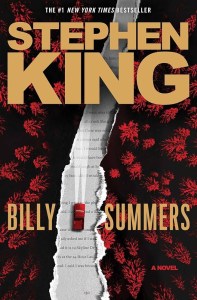
Book Review: Billy Summers

By Stephen King

Finished 7/25/25

Billy Summers is an excellent book and one I thoroughly enjoyed all the way through. At first I wasn’t completely sure what to expect because the premise seems almost surface-level: a sniper hitman taking on one last job before retirement. Billy has a careful plan that will allow him to disappear afterward, even while knowing the people who hired him clearly have their own setup in place that would likely end with him dead after the assassination.

The job itself is straightforward enough. Billy is hired to kill a convict as he comes down the courthouse steps. But the story becomes far more interesting because of the way Billy prepares for the job and the life he creates around it. To stay hidden he moves through multiple personas, blending into different environments while waiting for the right moment. King spends a lot of time showing Billy quietly observing the world around him, and those slower sections are where the book really finds its rhythm.

What surprised me most is how much sweetness there is in Billy as a character. Despite being a professional killer, he constantly shows kindness to the people around him. He befriends a family in the neighborhood and plays Monopoly with the kids, even winning one girl a flamingo stuffed animal at a carnival by playing a shooting game—almost a little too well. In another place he carefully looks after a family’s houseplants while sharing their flat. These small moments make Billy feel far more human than the typical “hitman” character.

Then there’s Alice, one of the most important relationships in the book. Billy helps nurse her back to health after she’s been brutally attacked, and their connection becomes one of the emotional cores of the story. The dynamic between them adds a sense of warmth and purpose to Billy’s life that goes far beyond the original job he was hired to do.

King also spends time exploring Billy’s past, which helps explain why he lives the way he does. There’s deep trauma there—his sister being killed in front of him when he was young, Billy shooting the man responsible in self-defense, and the brutal experiences he went through during his time in Iraq. Those pieces of history make it clear that Billy understands exactly what kind of man he is. He often admits that he’s a bad man, even if he tries to follow one personal rule: he only kills bad men.

By the end, the story becomes less about the assassination itself and more about Billy trying to leave something meaningful behind. One of the most beautiful parts of the novel is the way Alice finishes the story Billy has been writing about his own life. She changes the ending slightly, imagining a version of Billy still out in the world, peaceful and alive. The truth is different, but the act of writing the story helps her discover her own voice.

King closes the emotional arc of the novel with a thought that perfectly captures that idea:

“Did you know that you could sit in front of a screen or a pad of paper and change the world? It doesn’t last, the world always comes back, but before it does, it’s awesome. It’s everything.” This quote speaks to the profound transformative power of storytelling and the ability of writers to create alternate realities and temporarily escape the confines of the real world.

Billy Summers ends up being much deeper and more moving than its premise suggests. It’s a story about violence and redemption, but also about kindness, creativity, and the strange ways people help each other heal.

Rating: 9.75/10 — nearly perfect and maybe top 5 King books.

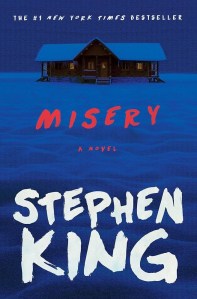
Book Review: Misery

By Stephen King

Finished 6/29/25

Misery is one of Stephen King’s most famous horror novels, and while I can definitely see why it’s so highly regarded, it ended up being just okay for me. The premise is simple but very effective: a novelist named Paul Sheldon ends up trapped in the home of Annie Wilkes, his self-proclaimed “number one fan.” From there the story becomes a tense, claustrophobic battle of wills between a writer who just wants to survive and a fan who is far more dangerous than she appears.

Annie is easily the most memorable part of the book. She’s obsessive, unpredictable, and convinced she’s doing the right thing, which makes her both terrifying and fascinating at the same time. King does a great job writing her dialogue and inner logic—she’s the kind of villain who feels disturbingly real because she truly believes she’s justified in everything she does.

Paul is also an interesting character because so much of the story takes place inside his head. A lot of the tension comes from watching him think through his situation, plan small acts of resistance, and try to maintain some sense of control in an environment where he has almost none. Those moments—especially when Annie isn’t around and Paul has to carefully test his limits—are easily the most gripping parts of the book.

Where the novel lost a few points for me was in how gruesome it becomes. Annie’s treatment of Paul gets extremely graphic at times, and the story leans heavily into that physical brutality. For readers who love intense horror, that’s probably part of the appeal. For me, it occasionally crossed into territory that felt more uncomfortable than suspenseful.

Another element that didn’t quite land was the inclusion of large sections of the fictional Misery novel Paul is forced to write. I understand the purpose of those chapters within the story, but they were harder to get through and occasionally slowed the pacing.

That said, the writing itself is still very strong. King builds tension extremely well and creates a setting that feels incredibly claustrophobic, almost like a pressure cooker slowly tightening around the characters. Even when the story dragged slightly for me, it was easy to appreciate how carefully constructed it is.

Overall, Misery is clearly a very well-written psychological horror novel. It just happens to lean more heavily into the kind of gruesome intensity that doesn’t quite land as strongly for me personally. Fans of darker, more visceral King stories will probably love it.

Rating: 7.5/10

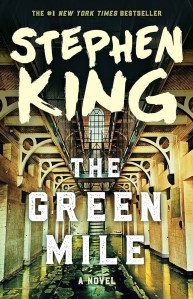
Book Review: The Green Mile

By Stephen King

Finished 6/17/25

Wow. Just…wow. This one absolutely lands in my top three Stephen King books. It’s one of those stories that sticks with you long after you close the last page.

At the center of it all is John Coffey, who might be the most beautiful and heartbreaking character King has ever written. He’s a massive man on death row, accused of murdering two young girls, and because of his size—and the racism of the time—it’s easy for everyone to assume the worst. He’s sent to Cold Mountain Penitentiary’s death row block, known by the guards as The Green Mile, where inmates take their final walk to Old Sparky, the electric chair.

But John Coffey is not what anyone expects.

What slowly unfolds is the realization that John has an extraordinary gift—he can heal people, pulling sickness and pain out of them in a way that feels almost supernatural. Some of the moments where this power shows up are among the most moving scenes King has ever written. They’re strange, unsettling, and deeply emotional all at once.

The story is told through Paul Edgecombe, the guard in charge of the Mile, and he’s a great narrator for this kind of story: thoughtful, conflicted, and very human. The other guards are memorable too, each bringing their own personality and moral compass to the job. Even many of the inmates end up being more layered than you expect, which makes the whole world of the book feel lived-in and complicated.

What really makes The Green Mile work, though, is how it blends the supernatural with something deeply human. On the surface it’s a prison story. Underneath, it’s about mercy, justice, cruelty, and the weight of carrying other people’s pain. King leans hard into the idea that appearances can be wildly misleading, and that some of the most gentle souls end up in the darkest places.

It’s also one of King’s most emotional books. Not scary, exactly but more haunting in a moral sense. The kind of story that quietly builds until it hits you in the gut.

There are a lot of memorable turns along the way, and King threads them together in a way that keeps the tension high without ever losing sight of the characters. By the end, the story feels less like a thriller and more like a tragedy you knew was coming but still hoped might somehow turn out differently.

Beautiful, strange, and deeply sad in the best possible way.

Rating: 9.5/10

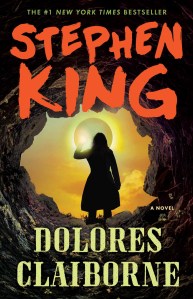
Book Review: Dolores Claiborne

By Stephen King

Finished 5/30/25

This one grabbed me immediately and never really let go. What’s wild is that the whole book is basically one continuous monologue—no chapters, just Dolores telling her story straight through—and somehow it only makes it more gripping. It feels like you’re sitting across the table from her while she unloads decades of her life.

Dolores is recounting everything to investigators who think she may have had something to do with the death of the wealthy woman she worked for, Vera Donovan. From there the story slowly opens up into something much bigger: her life, her marriage, and the long shadow cast by her abusive husband.

That husband is one of the most despicable characters King has ever written. The cruelty in that household—especially what he does to their daughter—is almost unbearable at times, and it’s the driving force behind everything Dolores eventually does. Her decision to get rid of him doesn’t come from anger so much as it comes from protection. She’s trying to stop something that’s already gone too far.

The way it all unfolds is classic King tension. Dolores gets him drunk, lures him out toward a well, and lets gravity and circumstance do the rest. But King doesn’t make it simple or clean. The scene at the well—what Dolores sees looking down into it, what happens as her husband struggles—is one of the most vivid stretches of writing in the whole book.

Running alongside that story is Dolores’s long, complicated relationship with Vera Donovan, the wealthy woman she works for. Their dynamic ends up being one of the best parts of the novel. Vera is sharp, intimidating, and clearly understands more about Dolores’s situation than she ever says outright. The conversations between them feel like two incredibly tough people recognizing something in each other.

And the whole thing taking place during a solar eclipse is such a perfect Stephen King touch. The town is distracted, everyone’s outside watching the sky, and Dolores knows exactly what that means.

What really makes the book work, though, is the voice. King completely disappears into Dolores. She’s blunt, funny, observant, and far smarter than people assume. By the time you’re halfway through, it doesn’t feel like a novel anymore—it feels like a confession.

It’s chilling, tense, and surprisingly emotional in places. And the fact that King builds an entire cast of characters and decades of history through a single voice is pretty remarkable.

Rating: 9/10

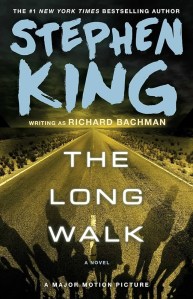
Book Review: The Long Walk

By Stephen King (written as Richard Bachman)

Finished 4/20/25

Really enjoyed this one. It’s one of King’s simplest premises, but it ends up being one of his most unsettling.

The setup is brutally straightforward: 100 teenage boys enter a contest where they must keep walking until only one of them is left. They have to maintain at least four miles per hour, stay on the road, and if they slow down they receive warnings. Three warnings are allowed—on the fourth, they’re shot. Warnings reset after an hour if you manage to keep your pace. The walkers get small food rations and all the water they want, but otherwise it’s just step after step until your body (or your mind) gives out.

The story mostly follows Ray Garraty, who becomes the emotional center of the group. Along the way he forms bonds with several of the other walkers, especially McVries, who ends up being one of the most compelling characters in the book. Their friendship—and the way the boys alternately support each other, clash with each other, and slowly break down—is really the heart of the story.

A third major figure is Stebbins, the quiet, intense walker who always seems to have a little more left in the tank than everyone else. His role in the story becomes more interesting as things narrow down toward the end.

What I liked most about the book is how much time King spends inside the heads of these kids. As the miles stack up, their moods swing wildly. Sometimes they’re joking, telling stories, almost acting like they’re on a strange road trip together. Other times the tension turns into resentment, anger, or despair. It starts to feel less like a competition and more like a group of soldiers marching toward something none of them can avoid.

And that’s probably why the book works so well—it’s clearly about more than just the walk itself.

You can read it as a metaphor for a lot of things. Life, obviously. Everyone’s walking the same road, and eventually everyone drops out. There’s technically a “winner,” but the idea of a prize at the end starts to feel meaningless after everything the characters go through.

There’s also a darker angle about spectatorship. Crowds line the roads cheering the walkers on, watching kids collapse and die like it’s entertainment. It taps into that uncomfortable truth about how fascinated people are with spectacle and suffering.

Some people also see it as a metaphor for war—especially Vietnam, which was happening around the time King originally wrote it. A long, grinding ordeal where survival itself might not feel like much of a victory.

The ending is intentionally a little ambiguous. Garraty technically wins, but the final moment has a strange, almost surreal feeling to it. It’s hard to tell exactly what King wants you to think is happening there, and I kind of like that he leaves it open.

Bleak, tense, and surprisingly emotional for such a stripped-down concept.

Rating: 8.5/10