Book Review: The Running Man

By Stephen King (writing as Richard Bachman)

Finished 2/20/26
The Running Man is fast, enjoyable, and completely action packed, a dystopian near-future story built around an antihero named Ben Richards. Stephen King—writing under the Richard Bachman name—imagines a society dominated by something called the “Free Vee,” a nonstop television system that broadcasts various game shows, each varying in degree of difficulty and danger. The concept feels simple on the surface but becomes increasingly unsettling the more the story unfolds.

There appear to be two different types of societies in this future. Of course there are the well-off, and then there are the poor people living in places like Co-Op City. That’s where Richards lives with his wife and his very sick daughter. Desperation pushes him toward one of the most dangerous shows on the Network: The Running Man. The premise is brutal. Richards must survive for several weeks while being hunted by professional trackers across the country. For every hour he stays alive, money is sent back to his family. The only catch is that he has to deposit two videotapes every day describing where he’s been and what’s happening to him.

King uses this setup to create a story that moves incredibly fast while still painting an interesting picture of this dystopian world. There are descriptions of cars that can fly or hover above the ground, constant contamination in the air that people struggle to avoid, and a society that seems completely numb to violence as long as it’s entertaining. Richards makes a few friends along the way, though things mostly go from bad to worse as the Network slowly closes in. At one point he even blows up a YMCA where police are trying to capture him, a moment that perfectly captures the chaotic desperation of the entire situation.

Richards himself is an interesting character because he’s clearly an antihero. You’re not always sure if you actually like him. He’s sarcastic, rough around the edges, and obviously shaped by years of hardship in this unforgiving society. But that roughness makes sense given what he’s been through, and it becomes easier to understand why he makes the decisions he does as the story escalates.

The novel barrels toward an explosive ending where Richards commandeers a jet and essentially turns himself into a human missile, crashing directly into the Network’s building in a final act of defiance. It’s dramatic, destructive, and strangely fitting for a story about a world where entertainment and cruelty have become the same thing.

All in all, The Running Man is a very exciting book with lots of action and constantly moving pieces. The dystopian setting, the nonstop chase, and the morally complicated main character make it a gripping read that’s hard to put down once it gets going.

Rating: 8/10
Book Review: Carrie

By Stephen King

Finished 1/22/26

Carrie is just a well-written—and honestly horrifying—story. It’s one of Stephen King’s most well-known books, so there’s probably no huge need to summarize the entire plot, except for my own memory. What stands out immediately is how simple the premise is and how effectively King turns that simplicity into something unsettling and tragic.

The novel centers on Carrie White, a quiet and painfully awkward high school girl who is brought up by an extremely religious mother determined to force Carrie to follow in her footsteps. That upbringing leaves Carrie completely unprepared for normal parts of life, including a now-famous scene early in the book where she experiences her first period in the girls’ locker room shower. The other girls mock her mercilessly because she has no idea what is happening. It’s a scene that is both uncomfortable and heartbreaking, and it really sets the tone for the rest of the story.

The cruelty from her classmates leads to consequences for some of the girls, including detention that threatens their ability to attend prom. One of them, Chris, refuses the punishment and becomes determined to get revenge on Carrie. Meanwhile another student, Sue Snell, actually feels guilty about what happened and encourages her boyfriend Tommy to take Carrie to prom as a genuine act of kindness. That decision creates one of the most emotionally interesting parts of the book because, for a brief moment, it seems like Carrie might finally be accepted.

Of course, this is a Stephen King story, and things don’t stay hopeful for long. What begins as a simple act of teenage cruelty eventually escalates into something far darker, especially once Carrie’s telekinetic abilities start to emerge. The famous prom sequence is chaotic and terrifying, and it transforms the novel from a story about bullying into something much larger and more destructive.

One of the most interesting aspects of Carrie is the way King structures the book. Instead of telling the story in a completely straightforward way, he jumps between multiple perspectives and formats—Sue Snell’s later reflections, excerpts from police interviews with survivors, and even newspaper articles examining what happened. That approach gives the novel a strange documentary-like feeling, as if the reader is piecing together the aftermath of an event that shocked an entire town.

Reading it now, it’s also fascinating to see such early writing from King. The voice isn’t quite as polished as some of his later work, but the ideas are already incredibly strong. You can clearly see the themes that would come to define much of his career: social cruelty, small-town pressure, and the terrifying consequences of power appearing in the wrong place at the wrong time.

Even decades later, Carrie still feels tense, tragic, and strangely sympathetic toward its central character. It’s easy to see why it became such an iconic story.

Rating: 8.5/10

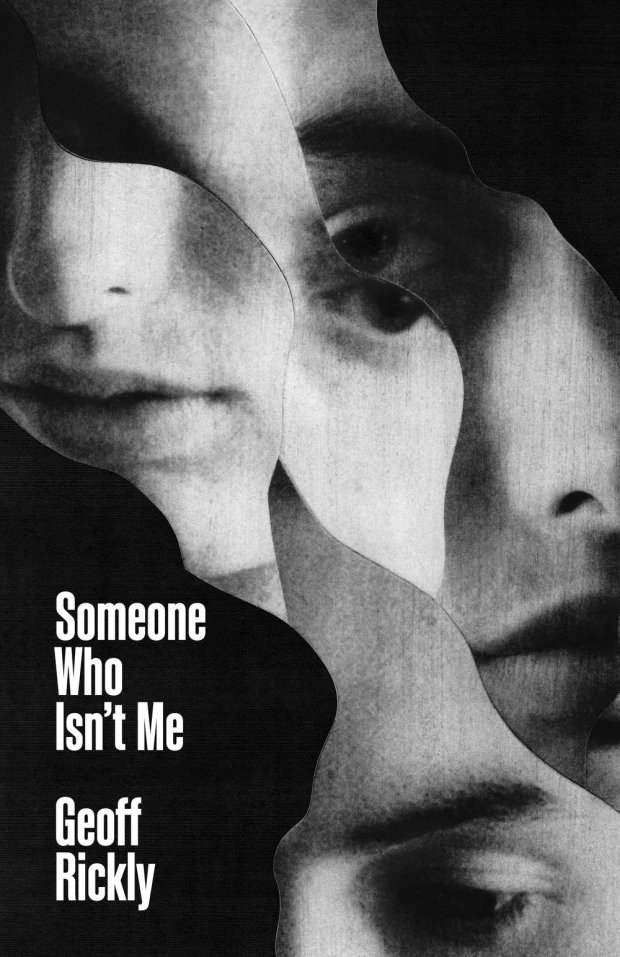
Book Review: Someone Who Isn’t Me

By Geoff Rickly

Someone Who Isn’t Me is a languid cautionary tale that takes readers through the rollercoaster ride of addiction. There are scenes of scoring junk outside a place of employment in order to use at work, descriptions of how years of abuse can swallow your identify and blur reality, and depictions of the types of challenges faced on the road to salvation/sobreity.

This debut from Geoff Rickly navigates the full mental lifecycle of a hard drug user long after it’s taken a devastating toll on their inner psyche. Revealing diction takes readers on an intriguing odyssey of introspection, an exercise in self-exploration used to attempt to overcome the harrowing grips that opioid-based substances can place on a mind.

This novel is for those who want a raw read and wish to better understand all aspects of human nature. Specifically, what life is like being haunted by drug addiction in an unromantic, seemingly accurate portrayal that will feed curious minds. Fans of Burroughs’ works like Naked Lunch and other exposés that take creative approaches to writing about the effects of chemical dependency will find this to be a thrilling, modern day take. Not a single page is wasted throughout this semi-autobiographical text, turning the many hallucinatory passages about losing sight of yourself into something layered, vulnerable, and even beautiful:

My reflection listens carefully, worrying the corners of two folded-up hundred dollar bills in his jacket pocket, as he enters the freezer section. When my man reaches the frozen pizzas, he looks at my reflection in the glass of the freezer doors, and I wonder if he sees what I see: the reflection of my reflection, the ghost of my ghost, floating in the cold phosphor glare of the market hungry but unable to eat, thirsty but unable to drink.

At the core of this novel is an interesting exploration of using ibogaine, a real plant-based psychoactive compound leveraged by rehab clinics in Mexico, to help users introspectively dissect certain life events that are believed to be at the root of amplifying addictive behaviors. The goal is to finally face those issues head-on and hopefully, get clean. This allows the protagonist to have dream-like experiences—some seem to be completely real visions of actual occurrences while others are distorted realities—to help him work through what causes him to use, see how much he is cared for, and figure out how to navigate the next phase of his life while trying to stay sober.

Rating: 8.75/10

Reading Makes My World Go ‘Round

Books vs. Television (can't we all just get along)
Books vs. Television (can’t we all just get along)

Reading is a strange thing.  I find it completely different than anything else in life.  That’s a pretty profound statement because well, EVERYTHING is different than EVERYTHING else.  But what I mean is that reading makes me feel, think and act in a way that can’t be mimicked by any other activity.

Time Moves At The Speed Of…Well, Time:

I am currently reading “Darker Than the Deepest Sea: The Search for Nick Drake” on my lunch breaks at work.  There’s something about reading during these 30 minutes that just makes the pace of time feel so natural.  Let me explain: I consider 30 minutes to be a pretty short period of time. While getting engulfed into the life of an enigmatic character like Nick Drake, those 1800 seconds feel like they are over before they started.  Compare this experience to 30 minutes of sitting at a computer and working and I think you get what I mean.

My Brain Feels Like It’s Working:

Goooooooeeeyyy Brain Cupcakes

I picture my brain as this gooey ball that sometimes lets in some new stuff, but mostly forgets the things I have learned throughout my life (probably looks something like the gooey brain cupcakes shown here to the right).  Most of the time the gooey ball just kinda sits there while I watch TV or listen to music and grooves along with the frequencies traveling through the air.  But when I am reading, I feel like the words and messages being communicated to me are actually flying off the page, into the goo, and giving my brain some sort of structure.  The words from books actually stick around and more often than not, make it into sentences or my writing.

Side note: I actually enjoyed readying during my graduate studies.  I would be watching TV and thinking “hey, I’m looking forward to reading after this show is over.”  My brain is one weird specimen.

Feeding My Feelings Through Fact:

Ok, I’m pretty nerdy.  I am currently also reading “A Short History of Nearly Everything” on my iPad.  This book is 900 pages of everything you learned in elementary, middle and high school but didn’t really care about at the time.  I’m getting a second chance to learn about the history of dinosaurs, the solar system, elements, geography, atoms, gravity, etc.  The weird thing is that as I am learning about the evolution of Earth and on a larger scale life in the Universe, I start to really have feelings and thoughts about my own existence.  I have laughed out loud, felt sorrow and concern, related with researchers and been angered by outrageous scientific claims. Nerd facts bringing out emotion? That’s just not right.  But it’s an experience that is more powerful than any drama on TV or comedy I see in the movies.

How? What? Huh?

Here’s my take on the whole thing: reading leaves room for imagination.  Two people sitting ten feet away from each other are reading the same chapter in the same book.  But both of them are having completely different experiences.  No matter how descriptive a story may be, each person is still going to have a different illustration playing out in their head.  Think about book clubs or even English classrooms – the purpose of discussions are to get everyone on the same page and understanding because of the “fill in the blank” nature of reading.

TV, movies and other media rich mediums don’t leave much room for interpretation.  It doesn’t take much effort for your brain to absorb the information so the goo just kind of goes with the flow.  The conscious effort required to understand a piece of text enriches and livens your senses.

So as I said, reading makes the world go ’round.  But round for me is probably different than what round is for you.  I think of round as a baseball, with seams, and printed logos.  You probably think of round like a globe, or a doughnut, or the Pillsbury dough boy, or…you get it.