By Stephen King
Finished 9/20/25
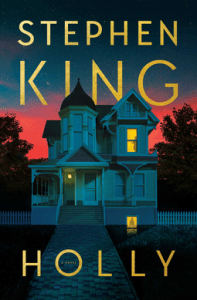
Holly is a fabulous, very traditional-feeling mystery that shows Stephen King leaning more into detective fiction than outright horror. The story follows private investigator Holly Gibney, who unexpectedly strikes it rich after inheriting money from her deceased mother—someone she openly despised—but chooses to keep working anyway. That decision sets the stage for a case that slowly unfolds into something far darker than it initially appears.
The mystery begins with several missing people and Holly trying to figure out what connects them. As the investigation develops, it becomes clear that the victims are linked in ways that no one initially expects. The trail eventually leads to a pair of professors, Em and Roddy Harris, whose disturbing secret centers around a belief that consuming certain “nutrients”—particularly human organs—can keep them living longer and healthier lives. The idea is grotesque, but King presents it in a way that feels almost clinical, which somehow makes it even creepier.
One of the strongest parts of the novel is Holly herself. She’s a really interesting character you just want to root for. Holly is thoughtful, careful, and often unsure of herself, but she has a persistence that makes her a compelling detective. The relationships around her help give the book its emotional center, especially the dynamic between Holly, Jerome, and Jerome’s sister Barbara, who helps out at the agency.
Barbara’s own storyline ends up becoming surprisingly important. She develops a connection with an older poet professor named Olivia, a character who is warm, funny, and genuinely kind. Through that relationship, Barbara begins uncovering pieces of information that eventually help Holly connect the dots in her investigation. Those smaller character interactions add a lot of depth to the story and keep it from feeling like just a straightforward procedural.
King also does a great job making the villains especially detestable. Em and Roddy Harris are arrogant, snobby, and convinced they are smarter and better than everyone else. Their self-importance and cruelty make it easy to root for their downfall (tied to their unique, ahem, “diet”) as the story builds toward its final confrontation.
In the end, what really carries Holly are the relationships—Holly working through the case, Jerome and Barbara supporting her, and even Holly’s partner Pete helping from a distance while dealing with COVID. Those connections give the book warmth even as the mystery itself becomes darker and more dangerous.
By the final pages, Holly has survived another brutal case and is already looking toward the next one. After finishing the book, it’s easy to feel the same way.
Rating: 8.5/10
 KennyBloggins is Kenny Bringelson