Book Review: Dolores Claiborne

By Stephen King

Finished 5/30/25

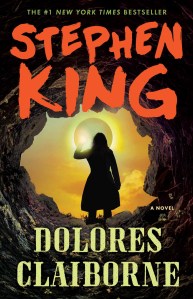
This one grabbed me immediately and never really let go. What’s wild is that the whole book is basically one continuous monologue—no chapters, just Dolores telling her story straight through—and somehow it only makes it more gripping. It feels like you’re sitting across the table from her while she unloads decades of her life.

Dolores is recounting everything to investigators who think she may have had something to do with the death of the wealthy woman she worked for, Vera Donovan. From there the story slowly opens up into something much bigger: her life, her marriage, and the long shadow cast by her abusive husband.

That husband is one of the most despicable characters King has ever written. The cruelty in that household—especially what he does to their daughter—is almost unbearable at times, and it’s the driving force behind everything Dolores eventually does. Her decision to get rid of him doesn’t come from anger so much as it comes from protection. She’s trying to stop something that’s already gone too far.

The way it all unfolds is classic King tension. Dolores gets him drunk, lures him out toward a well, and lets gravity and circumstance do the rest. But King doesn’t make it simple or clean. The scene at the well—what Dolores sees looking down into it, what happens as her husband struggles—is one of the most vivid stretches of writing in the whole book.

Running alongside that story is Dolores’s long, complicated relationship with Vera Donovan, the wealthy woman she works for. Their dynamic ends up being one of the best parts of the novel. Vera is sharp, intimidating, and clearly understands more about Dolores’s situation than she ever says outright. The conversations between them feel like two incredibly tough people recognizing something in each other.

And the whole thing taking place during a solar eclipse is such a perfect Stephen King touch. The town is distracted, everyone’s outside watching the sky, and Dolores knows exactly what that means.

What really makes the book work, though, is the voice. King completely disappears into Dolores. She’s blunt, funny, observant, and far smarter than people assume. By the time you’re halfway through, it doesn’t feel like a novel anymore—it feels like a confession.

It’s chilling, tense, and surprisingly emotional in places. And the fact that King builds an entire cast of characters and decades of history through a single voice is pretty remarkable.

Rating: 9/10

Book Review: Stardust

By Neil Gaiman

Finished 5/7/25

Pure fantasy, through and through.

This one had all the ingredients of a charming fairy-tale adventure, but for whatever reason it felt like a bit of a slog for me. The world is whimsical and imaginative in the way Gaiman does best, but it almost felt too enchanting—like everything was wrapped in velvet and moonlight without much bite underneath.

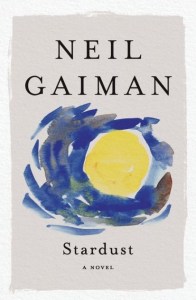
The story centers on Tristran Thorn, a young guy from a small town who promises a girl he’ll retrieve a fallen star for her. If he succeeds, she says he can have whatever he desires. So off he goes beyond the wall into the magical land of Faerie to find it.

Of course he’s not the only one searching for the star. There’s an ancient witch who wants it to restore her youth, and there are rival brothers from the royal family of Stormhold who need the star as part of their claim to the throne. The Stormhold storyline was probably the most fun part for me. The brothers slowly getting picked off one by one—and then returning as ghostly observers commenting on events—is a clever and funny touch.

The witches plotline, on the other hand, felt a little more predictable. It’s the kind of fantasy trope you’ve seen before, and it never quite rises above that.

Eventually Tristran does succeed in finding the fallen star, though things don’t unfold the way he expected. The journey ends up reshaping what he actually wants out of life. There’s also a late reveal about Tristran’s own lineage that ties everything together in a pretty classic fairy-tale way.

For me, the biggest strength of the book is its tone. It reads like a story someone might tell you by a fireplace—playful, strange, and full of little magical detours. But that same dreamy quality is also what made it drag a bit. I kept waiting for something sharper or darker to cut through all the whimsy.

Still, there are moments of cleverness and charm throughout, and you can see why it’s such a beloved Gaiman book.

Probably my least favorite of his so far—or maybe my tastes have shifted a bit since the last time I was deep in his stuff. Hard to say.

Rating: 7.25/10

Book Review: The Long Walk

By Stephen King (written as Richard Bachman)

Finished 4/20/25

Really enjoyed this one. It’s one of King’s simplest premises, but it ends up being one of his most unsettling.

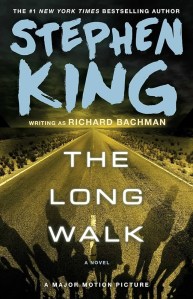
The setup is brutally straightforward: 100 teenage boys enter a contest where they must keep walking until only one of them is left. They have to maintain at least four miles per hour, stay on the road, and if they slow down they receive warnings. Three warnings are allowed—on the fourth, they’re shot. Warnings reset after an hour if you manage to keep your pace. The walkers get small food rations and all the water they want, but otherwise it’s just step after step until your body (or your mind) gives out.

The story mostly follows Ray Garraty, who becomes the emotional center of the group. Along the way he forms bonds with several of the other walkers, especially McVries, who ends up being one of the most compelling characters in the book. Their friendship—and the way the boys alternately support each other, clash with each other, and slowly break down—is really the heart of the story.

A third major figure is Stebbins, the quiet, intense walker who always seems to have a little more left in the tank than everyone else. His role in the story becomes more interesting as things narrow down toward the end.

What I liked most about the book is how much time King spends inside the heads of these kids. As the miles stack up, their moods swing wildly. Sometimes they’re joking, telling stories, almost acting like they’re on a strange road trip together. Other times the tension turns into resentment, anger, or despair. It starts to feel less like a competition and more like a group of soldiers marching toward something none of them can avoid.

And that’s probably why the book works so well—it’s clearly about more than just the walk itself.

You can read it as a metaphor for a lot of things. Life, obviously. Everyone’s walking the same road, and eventually everyone drops out. There’s technically a “winner,” but the idea of a prize at the end starts to feel meaningless after everything the characters go through.

There’s also a darker angle about spectatorship. Crowds line the roads cheering the walkers on, watching kids collapse and die like it’s entertainment. It taps into that uncomfortable truth about how fascinated people are with spectacle and suffering.

Some people also see it as a metaphor for war—especially Vietnam, which was happening around the time King originally wrote it. A long, grinding ordeal where survival itself might not feel like much of a victory.

The ending is intentionally a little ambiguous. Garraty technically wins, but the final moment has a strange, almost surreal feeling to it. It’s hard to tell exactly what King wants you to think is happening there, and I kind of like that he leaves it open.

Bleak, tense, and surprisingly emotional for such a stripped-down concept.

Rating: 8.5/10

Book Review: The 7 1/2 Deaths of Evelyn Hardcastle

By Stuart Turton

Finished 4/11/25

This one is a wild ride. Tons of characters, constant twists, and a really clever central concept—even if the ending left me a little underwhelmed.

The story begins with a man waking up in the woods with no memory of who he is. The only thing he knows is a name: Anna. Soon he realizes he’s inhabiting the body of a man named Sebastian Bell, and things only get stranger from there.

Eventually a mysterious figure in a plague doctor mask appears and explains the situation: he’s trapped in a kind of time loop and must solve the murder of Evelyn Hardcastle. To do that, he’ll live the same day repeatedly through eight different “hosts,” meaning eight different people at the estate where the murder takes place. Each host has different strengths, weaknesses, personalities, and social positions. Some are clever and observant. Others are cowardly, cruel, or just plain unpleasant.

What makes the book so engaging is how those perspectives reshape the story. Information gathered by one host can carry over to the next, but each body comes with its own limitations. Sometimes he’s sharp and capable, other times he’s stuck inside someone physically weak or morally questionable. Watching him piece the mystery together across these different identities is where the book really shines.

The main character eventually learns his own name—Aiden Bishop—and part of the reason he’s in this strange situation starts to come into focus. That revelation is intriguing and adds another moral layer to the story, especially involving his connection to Anna.

The mystery itself keeps twisting and folding back on itself. Everyone at the estate seems to have secrets, grudges, or hidden motives. It’s the kind of book where every time you think you’ve got a handle on things, another piece of the puzzle shifts.

But for me, the ending didn’t quite land as strongly as the setup. The explanation behind Evelyn, the murder, and the people involved is definitely twisty, but it also feels a little messy compared to how tight the concept is earlier on. And the bigger questions about the strange “prison” the characters are trapped in—who built it, how it works, what it really means to be released—are only lightly touched on.

It’s not a bad ending, just one that leaves you wishing the final reveal had the same precision as the premise.

Still, the idea behind the book is fantastic, and the execution for most of the ride is incredibly fun. It’s one of those mysteries where the structure itself becomes part of the intrigue.

Rating: 8/10.

I’d definitely recommend it for the concept alone—just go in knowing the landing might not feel quite as satisfying as the journey.

Book Review: Ascension

By Nicholas Binge

Finished 3/15/25

This one started incredibly strong for me—probably for about two-thirds of the book—before the ending lost a bit of its magic.

The story is framed around a man who was believed dead but has somehow turned up in a mental hospital. With him is a briefcase full of letters describing the expedition he went on, and the book unfolds through those accounts. The letters detail an unbelievable journey to a massive mountain range that suddenly appears in the middle of the ocean—bigger than anything humanity has ever seen.

From there, the story becomes about the climb itself. But it’s not just a physical ascent. It slowly turns into something much stranger and more psychological. The higher they go, the more reality seems to bend. Time doesn’t behave the way it should, people begin to lose their grip on what’s real, and the environment itself feels like it’s operating on rules humans don’t fully understand.

One of the coolest parts of the book is how it explains higher dimensions. There’s a great analogy about an ant moving across a table—it can only understand forward and backward across the surface. If something existed above that plane, the ant wouldn’t be able to perceive it. The idea is that humans might be in a similar position when it comes to a fourth dimension. The book plays with that concept in a really fun way, imagining folds or pathways that move through time and space in ways we can’t normally experience.

For most of the book, that mystery is what keeps it so compelling. Strange things start happening during the climb—visions, overlapping moments in time, encounters that don’t quite make sense—and you’re constantly trying to piece together what’s actually going on. It has that great creeping sense of unease where the environment itself feels almost alive.

Where the book stumbled for me was the final stretch. After so much buildup and such a fascinating mystery, the explanation didn’t feel quite as satisfying as the journey getting there. It’s not terrible—it just felt like the story shifted away from the eerie, mind-bending tone that made the earlier parts so gripping.

Still, the atmosphere and ideas carry the book a long way. The concept alone is strong enough that I kept thinking about it afterward, especially the way it plays with perception, time, and how limited our understanding of reality might actually be.

7.5/10 — mostly because the ending was fairly weak, but the concept and majority of the book were enjoyable.

Book Review: Someone Who Isn’t Me

By Geoff Rickly

Someone Who Isn’t Me is a languid cautionary tale that takes readers through the rollercoaster ride of addiction. There are scenes of scoring junk outside a place of employment in order to use at work, descriptions of how years of abuse can swallow your identify and blur reality, and depictions of the types of challenges faced on the road to salvation/sobreity.

This debut from Geoff Rickly navigates the full mental lifecycle of a hard drug user long after it’s taken a devastating toll on their inner psyche. Revealing diction takes readers on an intriguing odyssey of introspection, an exercise in self-exploration used to attempt to overcome the harrowing grips that opioid-based substances can place on a mind.

This novel is for those who want a raw read and wish to better understand all aspects of human nature. Specifically, what life is like being haunted by drug addiction in an unromantic, seemingly accurate portrayal that will feed curious minds. Fans of Burroughs’ works like Naked Lunch and other exposés that take creative approaches to writing about the effects of chemical dependency will find this to be a thrilling, modern day take. Not a single page is wasted throughout this semi-autobiographical text, turning the many hallucinatory passages about losing sight of yourself into something layered, vulnerable, and even beautiful:

My reflection listens carefully, worrying the corners of two folded-up hundred dollar bills in his jacket pocket, as he enters the freezer section. When my man reaches the frozen pizzas, he looks at my reflection in the glass of the freezer doors, and I wonder if he sees what I see: the reflection of my reflection, the ghost of my ghost, floating in the cold phosphor glare of the market hungry but unable to eat, thirsty but unable to drink.

At the core of this novel is an interesting exploration of using ibogaine, a real plant-based psychoactive compound leveraged by rehab clinics in Mexico, to help users introspectively dissect certain life events that are believed to be at the root of amplifying addictive behaviors. The goal is to finally face those issues head-on and hopefully, get clean. This allows the protagonist to have dream-like experiences—some seem to be completely real visions of actual occurrences while others are distorted realities—to help him work through what causes him to use, see how much he is cared for, and figure out how to navigate the next phase of his life while trying to stay sober.

Rating: 8.75/10